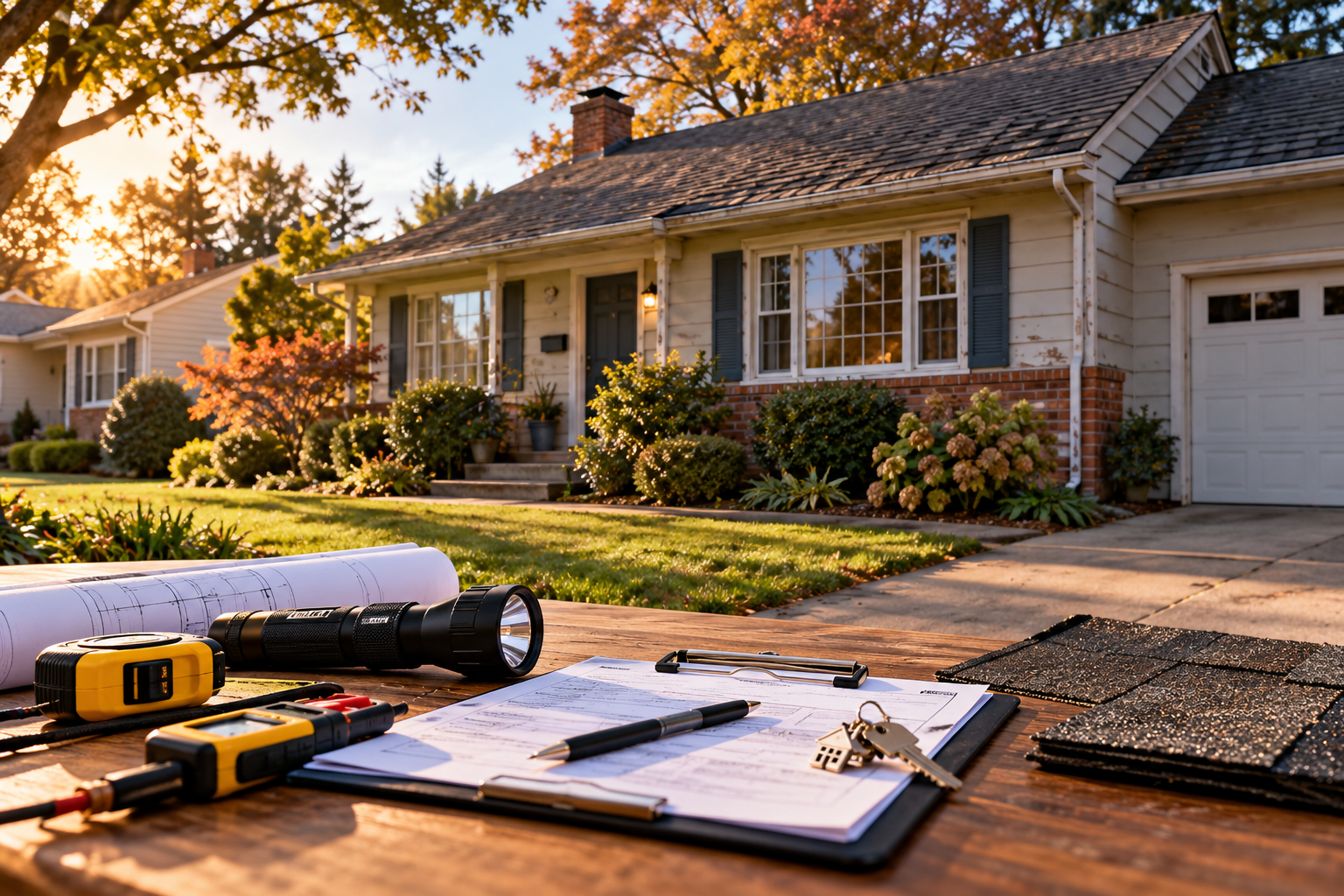
Older homes can offer something new construction often cannot: established neighborhoods, mature trees, distinctive architecture, larger lots and locations close to jobs, schools and city centers.
In the 2026 housing market, they can also give buyers more choice at a time when affordability remains difficult. But an older home should not be evaluated only by its purchase price and mortgage payment.
The condition of the roof, electrical system, plumbing, HVAC equipment and other components can influence repair costs and, increasingly, the cost or availability of homeowners insurance. That matters because most mortgage lenders require homeowners insurance before closing.
The issue is especially relevant now. Freddie Mac reported that the average 30-year fixed mortgage rate rose to 7.28% on October 1, 2026, from 7.03% the previous week. With financing already expensive, an unexpected insurance premium or major repair can materially change what a buyer can comfortably afford.
At the same time, the market is giving many buyers more time to investigate. Realtor.com identified September 27 through October 3 as the best buying week of 2026 nationally, citing seasonally higher inventory, less competition, more price reductions and a slower pace than peak buying periods.
That combination creates an opportunity: buyers may have more negotiating room, but they should use it to perform better due diligence rather than simply chase a lower purchase price.
Why Older Homes Deserve Extra Due Diligence in 2026
Age alone does not make a home risky.
A well-maintained 50-year-old house with updated wiring, plumbing, roofing and HVAC can be a better purchase than a much newer home with deferred maintenance.
The real question is the condition and remaining useful life of major systems.
Texas provided a useful example of this distinction in September 2026. The Texas Department of Insurance clarified that insurers in the state cannot decline or refuse to renew a homeowners policy solely because of the age of the house or roof. Insurers can, however, make underwriting decisions based on the physical condition of components such as roofing, wiring, heating, air conditioning, plumbing and siding.
| Texas Insurers (September 2026 Clarification) | What It Means |
|---|---|
| Cannot do | Decline or refuse to renew a homeowners policy solely because of the age of the house or roof |
| Can do | Make underwriting decisions based on the physical condition of roofing, wiring, heating, air conditioning, plumbing and siding |
Rules vary by state, but the broader lesson applies everywhere: buyers should investigate condition, not just age.
Before making an offer on an older home, find out when major systems were last replaced or substantially updated.
Ask about the roof, electrical panel and wiring, supply and drain plumbing, sewer line, water heater, HVAC system, windows, foundation, drainage and previous water damage.
Documentation is better than guesswork. Permits, invoices, warranties and contractor records can help establish what work was actually completed.
Get an Insurance Quote Earlier Than You Think
Many buyers treat homeowners insurance as a task for the final days before closing.
That is increasingly risky.
The Consumer Financial Protection Bureau recommends contacting several insurers, obtaining written quotes and comparing both premiums and coverage. Buyers should also share potential policies with their loan officer to make sure the coverage satisfies lender requirements.
For an older home, consider doing this during your due-diligence period rather than waiting until the closing date approaches.
Give insurers the exact property address and answer questions accurately about the home’s roof, electrical system, plumbing, heating, prior claims and other characteristics.
Ask:
- Will you insure this property in its current condition?
- Are any inspections required?
- Are repairs required before coverage begins?
- Is roof coverage replacement cost or actual cash value?
- Are there separate wind, hurricane or other deductibles?
- Are water losses restricted?
- Would replacing a roof, panel or other system change the premium?
- Are there discounts for specific upgrades?
The CFPB also advises buyers to verify the homeowners insurance figure shown on the Loan Estimate because that number is an estimate from the lender; the actual premium comes from the insurer.
A large difference can change your projected monthly payment.
Roof Condition Can Affect More Than Repair Costs
A roof is one of the first components buyers should investigate.
Do not focus only on the installation year.
Ask the inspector to look for missing or damaged materials, active leaks, poor flashing, soft areas, ventilation problems, prior patching and signs of moisture in the attic.
Then obtain the seller’s documentation for previous roof work.
The distinction between age and condition is important. Texas’s new clarification explicitly says insurers may consider physical roof condition even though they cannot reject a policy merely because of roof age.
Insurance practices differ across states and companies, so ask the insurer directly how the specific roof will be treated.
Also ask how a future roof claim would be settled. A policy that pays replacement cost can behave very differently from one that applies depreciation to an older roof.
If the roof needs replacement soon, get a realistic contractor estimate before the inspection contingency expires. That gives you a better basis for negotiating a repair, seller credit or price adjustment.
Electrical Systems Need a Closer Look
Older houses may have undergone decades of additions, renovations and DIY projects.
A general inspection should identify visible concerns, but significant electrical questions may justify evaluation by a licensed electrician.
Look for issues such as:
- An outdated or damaged service panel
- Improper modifications
- Overloaded circuits
- Ungrounded outlets
- Missing GFCI or other safety protection where appropriate
- Exposed wiring
- Evidence of overheating
- Insufficient electrical capacity for modern appliances
If you plan to add an EV charger, induction range, heat pump, workshop equipment or other high-load devices, ask whether the existing electrical service can support them.
The cost is not only about correcting defects. A buyer may discover that planned modernization requires a panel or service upgrade.
Because insurers may consider the physical condition of wiring and electrical components, unresolved issues can also become an insurance question.
Inspect Plumbing and Sewer Lines
Plumbing problems can remain hidden until after closing.
Find out what type of supply and drain materials are present, whether sections have been replaced and whether the property has experienced leaks or sewer backups.
Pay attention to:
- Low water pressure
- Corrosion
- Slow drains
- Active or repaired leaks
- Water staining
- Aging water heaters
- Improper repairs
- Signs of previous sewer problems
For an older property, a sewer scope may be worth considering when appropriate.
A standard home inspection usually does not provide the same view inside an underground sewer lateral that a dedicated camera inspection can.
Tree roots, damaged pipe sections, offsets or deteriorated materials can create expensive problems that are difficult to detect from inside the home.
Ask your inspector whether the age, location or visible conditions justify specialist evaluation.
Do Not Ignore HVAC, Foundation and Water Intrusion
Major systems tend to become expensive when several reach the end of their useful lives at the same time.
A house with an aging roof, older HVAC system and drainage problem may be financially very different from another home at the same price.
For heating and cooling, record the equipment model, approximate installation date, service history and observed performance. If the system is questionable, consider a specialist evaluation.
For the foundation and structure, watch for significant cracks, uneven floors, sticking doors, moisture, movement or repairs that warrant further investigation.
Water is particularly important.
Check grading, gutters, downspouts, basement or crawlspace moisture, staining, musty odors and drainage around the structure.
A freshly painted basement wall should not automatically reassure you. Ask why it was painted and whether water has entered the area previously.
Know What a Standard Home Inspection Does — and Does Not — Cover
A home inspection is an important part of due diligence, but it is not a guarantee that every defect will be found.
Inspectors evaluate accessible components and report observed conditions. They generally cannot see behind finished walls or predict exactly when every system will fail.
The CFPB recommends scheduling a home inspection during the closing process and notes that an inspection contingency can allow a buyer to depend on the home being in acceptable condition.
Depending on the property, additional evaluations may include:
- Sewer scope
- Structural engineer
- Electrician
- HVAC contractor
- Roofing contractor
- Chimney inspection
- Pest or wood-destroying-organism inspection
- Radon testing
- Mold assessment when conditions warrant it
- Well or septic evaluation
- Specialist drainage review
Not every older home needs every specialist.
Use the general inspection, seller disclosures, property history and local risks to decide where deeper investigation is justified.
Turn Inspection Findings Into a Real Ownership Budget
An inspection report can be overwhelming because it may contain dozens of observations ranging from minor maintenance to major safety issues.
Do not treat every item equally.
Sort findings into four groups.
1. Immediate Safety or Insurance Issues
These may need correction before occupancy, financing or insurance.
2. Major Near-Term Capital Expenses
Examples might include a roof nearing replacement, an aging HVAC system or significant exterior work.
3. Deferred Maintenance
These are items that may not be urgent but will require money and attention.
4. Cosmetic Improvements
Paint, finishes and design changes generally belong last unless they are part of a broader repair.
Then build a three- to five-year ownership budget.
The CFPB advises buyers to preserve money for repairs, renovations, furnishings, moving expenses and an emergency cushion instead of putting every available dollar into the down payment.
That advice is particularly relevant with an older home.
A buyer who can technically close but has no remaining cash for a failed water heater, roof leak or HVAC repair may be financially overextended.
Use Today’s Buyer Leverage Carefully
The 2026 market is more balanced than the intense pandemic-era market in many locations.
Realtor.com’s seasonal analysis projected that the best buying week would have 13.3% more active listings than an average week, demand 30.1% below the annual peak and a market pace of roughly 64 days.
| Realtor.com Best Buying Week Projection | Figure |
|---|---|
| Active listings vs. an average week | 13.3% more |
| Demand vs. the annual peak | 30.1% below |
| Market pace | Roughly 64 days |
Those are national seasonal estimates, not guarantees for an individual city. But they illustrate why buyers in some markets may have more room to investigate and negotiate.
If inspection findings reveal legitimate issues, possible responses can include:
- Asking the seller to complete specific repairs
- Requesting a seller credit where permitted
- Renegotiating the price
- Asking for documentation or specialist evaluation
- Proceeding while budgeting for the work
- Walking away if the contract allows and the risk is unacceptable
Do not request a long list of trivial cosmetic repairs while ignoring the systems that actually affect safety, insurance and ownership cost.
Prioritize the expensive and consequential issues.
Regional Issues Buyers Should Consider
Older-home due diligence should reflect local conditions.
Florida and the Gulf Coast
Pay close attention to roof condition, wind mitigation, flood exposure, water intrusion and insurance requirements. Get insurance quotes early.
Texas
The September 29, 2026 Texas Department of Insurance clarification protects homeowners from denial or nonrenewal based solely on the age of a house or roof. Physical condition can still be considered, so inspections and maintenance remain important.
Northeast and Midwest
Older housing stock may make electrical, plumbing, heating systems, basements, masonry and freeze-related issues particularly relevant.
California and the West
In addition to older systems, evaluate wildfire exposure, defensible space, earthquake considerations and insurance availability where relevant.
The exact checklist should be adjusted for the home, climate, construction type and local building practices.
Older-Home Pre-Offer Checklist
Before making or finalizing an offer on an older house:
- Confirm the age and condition of the roof
- Ask for permits and invoices for major updates
- Identify the electrical panel and visible wiring condition
- Determine plumbing supply and drain materials
- Consider a sewer scope where appropriate
- Check HVAC age and service history
- Investigate foundation or structural concerns
- Look for evidence of water intrusion
- Review seller disclosures carefully
- Obtain homeowners insurance quotes early
- Ask whether the insurer requires repairs or inspections
- Verify the actual insurance premium with your lender
- Price major near-term repairs
- Keep an emergency reserve after closing
- Use specialist inspections when the general inspection identifies concerns
Final Thoughts
Buying an older home in 2026 can be an excellent decision.
The age printed in the property record is not the most important number. What matters is how the home has been maintained, what has been updated, what needs attention next and what those conditions mean for your insurance and budget.
Start the insurance conversation earlier than the final week before closing.
Inspect the roof as both a building component and a potential insurance issue. Understand the electrical and plumbing systems. Investigate water and structural concerns. Bring in specialists when the evidence justifies it.
Most importantly, convert the inspection report into dollars and timing.
A charming older home with documented updates and manageable maintenance may be a strong purchase. A seemingly affordable home with several major systems approaching replacement may cost considerably more than the listing price suggests.
In a market where mortgage rates reached 7.28% at the start of October 2026, buyers already have limited room for financial surprises.
The goal is not to find a house with no imperfections. It is to understand the imperfections before they become your expenses.
Related Reading
- Buying a Home in a High-Risk Area in 2026: How to Check Climate Risk, Insurance Costs and Flood Exposure Before You Buy
- Seller Concessions Explained: What Homebuyers Can Ask Sellers to Pay for in 2026
- How to Shop Mortgage Rates in 2026: A Homebuyer’s Guide to Comparing Lenders When Rates Are Around 7%
- First-Time Home Buyer Mistakes to Avoid
Sources
- Freddie Mac — Primary Mortgage Market Survey, October 1, 2026
- Consumer Financial Protection Bureau — Shop for Homeowner’s Insurance
- Consumer Financial Protection Bureau — Loan Estimate Explainer
- Consumer Financial Protection Bureau — Figure Out How Much You Want to Spend
- Texas Department of Insurance — Texas Homeowners Protected From Being Denied Insurance Based on Roof Age, September 29, 2026
- Realtor.com — The Best Time to Buy a Home Is the Week of Sept. 27–Oct. 3, September 2026