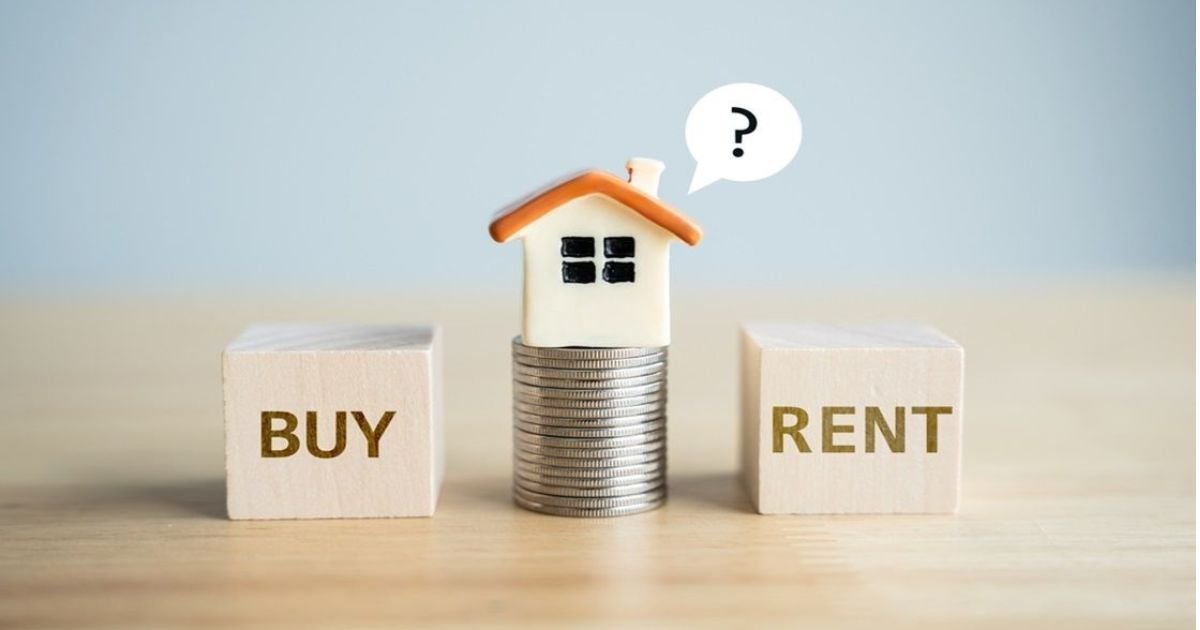
The choice between renting and purchasing a property in 2026 is not just about comparing the cost of paying rent with that of making a mortgage payment. Buying builds up equity, but it has associated costs like property taxes, insurance, maintenance fees, etc.
Renting is more flexible and comes with fewer maintenance worries, but buying a house may result in financial gains for years to come. The decision is largely dependent on how long one intends to stay in the property.
Understanding the Renting vs Buying a Home decision through total costs and the expected holding period can help renters determine whether purchasing makes financial sense.
Quick Answer: How Long Should You Stay After Buying a Home?
The number of years after which purchasing becomes better than renting does not exist universally. In any case, purchasing becomes more economical with longer periods due to the distribution of costs incurred on the purchase across more years.
For many buyers, staying in a home for several years is more practical than buying when planning to move again soon. The exact Home Buying Break-Even Point depends on:
- Home purchase price
- Down payment
- Mortgage rate
- Monthly rent
- Property taxes
- Home insurance
- Maintenance costs
- Closing and selling costs
- Home appreciation
- Investment returns on money not used for the purchase
A buyer should calculate these factors before deciding rather than relying on a simple rent-versus-mortgage comparison.
Renting vs. Buying a Home: What Actually Changes Financially?
Renting and buying create very different financial obligations.
In the case of renting, the tenant usually pays the rent and some utilities, whereas the landlord deals with any major repairs to the property and its expenses.
In case of buying, the owner of the property pays off the mortgage as well as any taxes, insurance, maintenance and repair costs and maybe homeowners association dues.
Yet, the owner builds equity in the house through the mortgage payment.
The main difference is in the fact that, in renting, there is only the consumption of housing, whereas in buying, asset ownership is included.
Understand the Cost of Renting vs Buying
A realistic Cost of Renting vs Buying comparison should include all major expenses rather than comparing rent with the mortgage payment alone.
Typical Renting Costs
Renters may have:
- Monthly rent
- Renters insurance
- Utilities
- Parking fees
- Moving expenses
- Security deposits
- Potential annual rent increases
The major advantage is predictability. Renters usually do not pay for major repairs to the building or property.
Typical Homeownership Costs
Homeowners may pay:
- Mortgage principal
- Mortgage interest
- Property taxes
- Homeowners insurance
- HOA fees
- Maintenance
- Repairs
- Utilities
- Closing costs
- Landscaping
- Major replacement costs
These expenses can significantly increase the true cost of owning a home.
Why the Length of Stay Matters
The How Long to Stay in a Home question is one of the most important parts of the rent-versus-buy decision.
Purchasing a property incurs costs in terms of transaction fees. Such costs may include fees charged by the lender, appraisal costs, title costs, inspection, and other closing costs.
Similarly, when selling a property, there are costs such as real estate agent commission and transaction costs.
The shorter the holding period of the homebuyer, the higher the costs that will eat into the possible gains of equity.
With a long-term holding period, the homebuyer is given enough time to spread out the transaction costs over the holding period.
What Is the Home Buying Break-Even Point?
The Home Buying Break-Even Point is the point at which the cumulative financial cost of owning a home becomes comparable with the cumulative cost of renting.
For example, suppose renting costs $2,500 per month while owning the comparable property costs $3,200 per month after including mortgage payments, taxes, insurance, maintenance, and other expenses.
The first difference may seem to put rental housing at an advantage. But at the same time, the homeowner is creating equity as well via mortgage payments.
Eventually, the situation changes financially.
The break-even period may come early or late, depending on various factors including mortgage interest rates, house prices, rent growth, appreciation, maintenance costs, and selling expenses.
Use a Rent vs Buy Calculator
A Rent vs Buy Calculator can help buyers compare the two scenarios over different periods.
Instead of looking only at a five-year scenario, consider multiple holding periods, such as:
- 3 years
- 5 years
- 7 years
- 10 years
- 15 years
For each scenario, estimate the total cost of renting and compare it with the total economic cost of owning.
A good calculation will take into consideration the value of the house in the future, mortgage left, transaction costs, increase in rent, cost of other investments, and cost of ownership. This becomes more useful when people try different scenarios for purchase.
Consider Homeownership Costs Beyond the Mortgage
Mortgage payments represent only one part of Homeownership Costs.
A homeowner should create a realistic annual budget that includes recurring and unexpected expenses.
Property Taxes
Property taxes can represent a significant annual expense. Rates vary by location and property value.
Home Insurance
The owner needs to be insured against possible property risks and other risks.
Maintenance and Repairs
Roof, HVAC system, plumbing, appliances, windows, and external parts may require eventual maintenance or replacement.
HOA Fees
Some properties pay HOA fees on a monthly or yearly basis. This has to be taken into consideration while making comparisons between owning and renting.
Utilities
Larger homes may also have higher heating, cooling, water, and electricity costs.
Considering these Homeownership Expenses provides a more realistic picture of the financial commitment.
Buying a House in 2026: Factors to Watch
Anyone buying a House in 2026 should evaluate both personal finances and local housing conditions.
Mortgage rates can have a major impact on affordability. A higher mortgage rate may cause an increase in payments and borrowing costs, whereas a lower mortgage rate can enhance affordability.
There is also huge variability in housing prices. National numbers don’t always mean what is happening locally in the area.
The Real Estate Market 2026 should therefore be evaluated locally. Buyers should review comparable home prices, inventory, rental rates, property taxes, insurance costs, and local employment conditions.
Market timing should not supersede the personal readiness of a person financially. The one who is financially stable and anticipates a longer holding period will make a different decision from the one who anticipates moving.
When Renting May Make More Sense
Renting may be financially and practically attractive when:
- The expected stay is short
- The local housing market is expensive relative to rents
- The buyer has limited savings
- Mortgage costs are high
- Employment or location may change soon
- The buyer values flexibility
- Maintenance responsibilities are undesirable
Renting can also allow someone to invest the money that would otherwise go toward a down payment and ownership costs.
That investment opportunity should be included when comparing the two options.
When Buying May Make More Sense
Buying may become more attractive when:
- The buyer expects to stay for many years
- Income is stable
- The buyer has sufficient emergency savings
- The property fits the long-term housing need
- Local home prices are reasonable relative to rents
- The buyer can comfortably afford ownership expenses
- Building equity is an important financial goal
A long-term homeowner may also benefit from greater payment stability if the mortgage has a fixed interest rate, although taxes, insurance, and maintenance costs can still change.
How Long Should You Stay in a Home?
There is no fixed Length of Homeownership that guarantees buying will outperform renting.
A three-year ownership period may work in one market but produce poor results in another. Similarly, a seven- or ten-year holding period can produce very different outcomes depending on purchase price, financing, appreciation, and selling costs.
The important question is whether the expected ownership period gives enough time to recover the transaction costs and build meaningful equity.
Homeowners should also consider life changes. A job relocation, growing family, divorce, retirement, or changing financial situation can make an otherwise attractive purchase less practical.
Compare the Decision Using a Simple Example
Consider a renter paying $2,400 per month for a comparable property.
A potential home purchase may require:
- $60,000 down payment
- $2,900 monthly mortgage payment
- Property taxes and insurance
- Annual maintenance
- Closing costs
The buyer should not simply compare $2,900 with $2,400.
Instead, calculate the total ownership cost over the expected holding period and subtract the value of the remaining home equity when evaluating the economic cost.
Then compare that result with total rent paid over the same period, including expected rent increases.
This approach provides a more meaningful comparison.
Don’t Ignore the Opportunity Cost of the Down Payment
A down payment represents money that could have been invested elsewhere.
For example, a buyer putting $60,000 toward a home gives up the opportunity to invest that money in stocks, bonds, or other assets.
This does not automatically make renting better. Homeownership also provides potential appreciation and equity accumulation.
However, a complete rent-versus-buy analysis should consider what happens to the down payment and other upfront funds under both scenarios.
Final Thoughts
The rental versus buying decision for 2026 should consider total expenses, financial stability, and the length of homeownership rather than focusing only on mortgage payments. Buying can be a good financial move when people stay long enough to spread out costs, build equity, and potentially benefit from home appreciation. Renting remains a practical option for those who value flexibility and lower upfront costs.
Before making a decision, compare realistic ownership and rental costs across several time periods. A Rent vs Buy Calculator can help model different assumptions, but the final decision should also consider personal finances, lifestyle, and future plans. PropertyDigest provides helpful real estate insights to help homeowners and buyers make more informed property decisions.
The most important question is not simply whether buying is cheaper than renting today. It is whether owning the home makes financial sense for the amount of time the buyer expects to live there.